
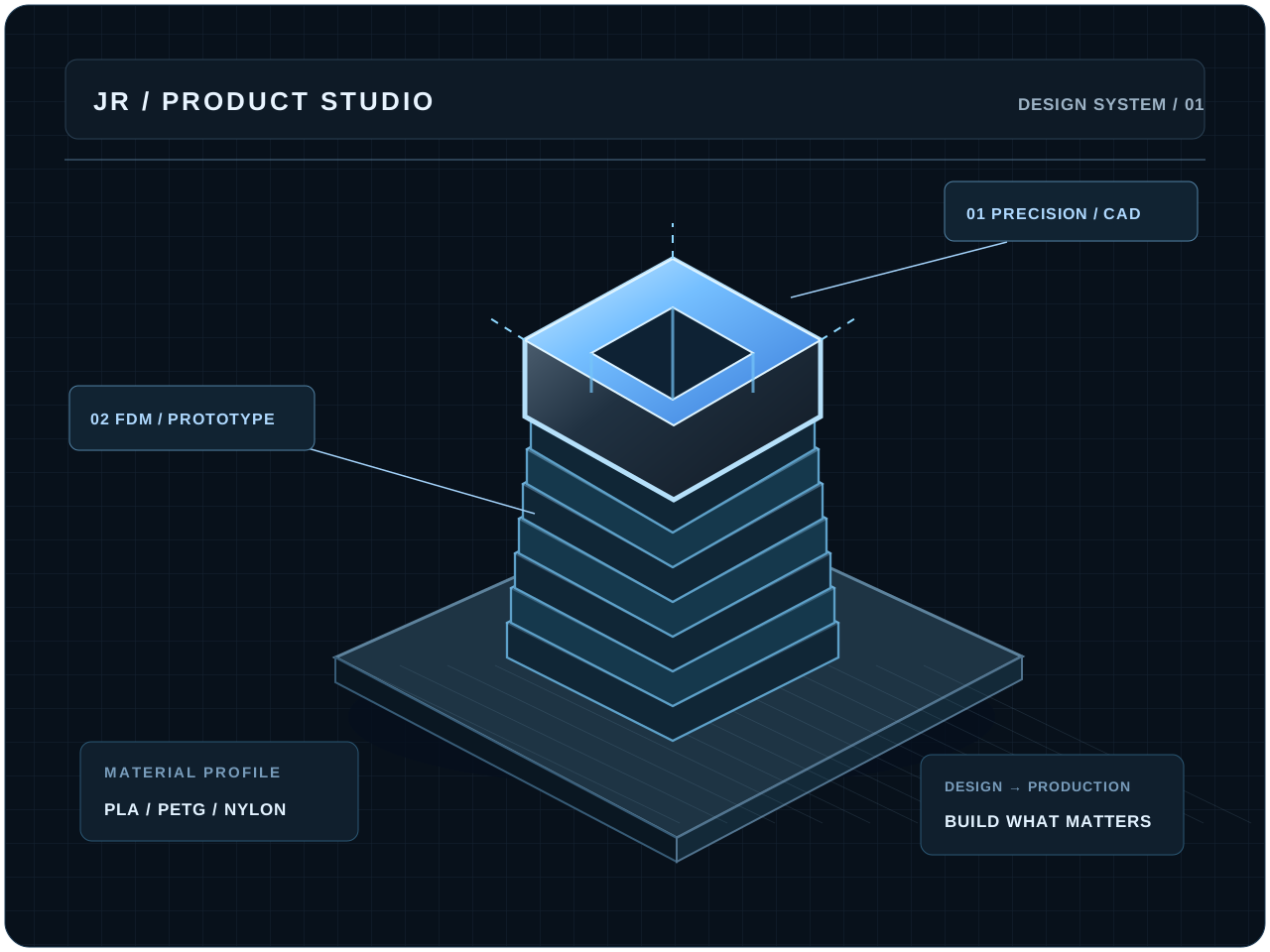
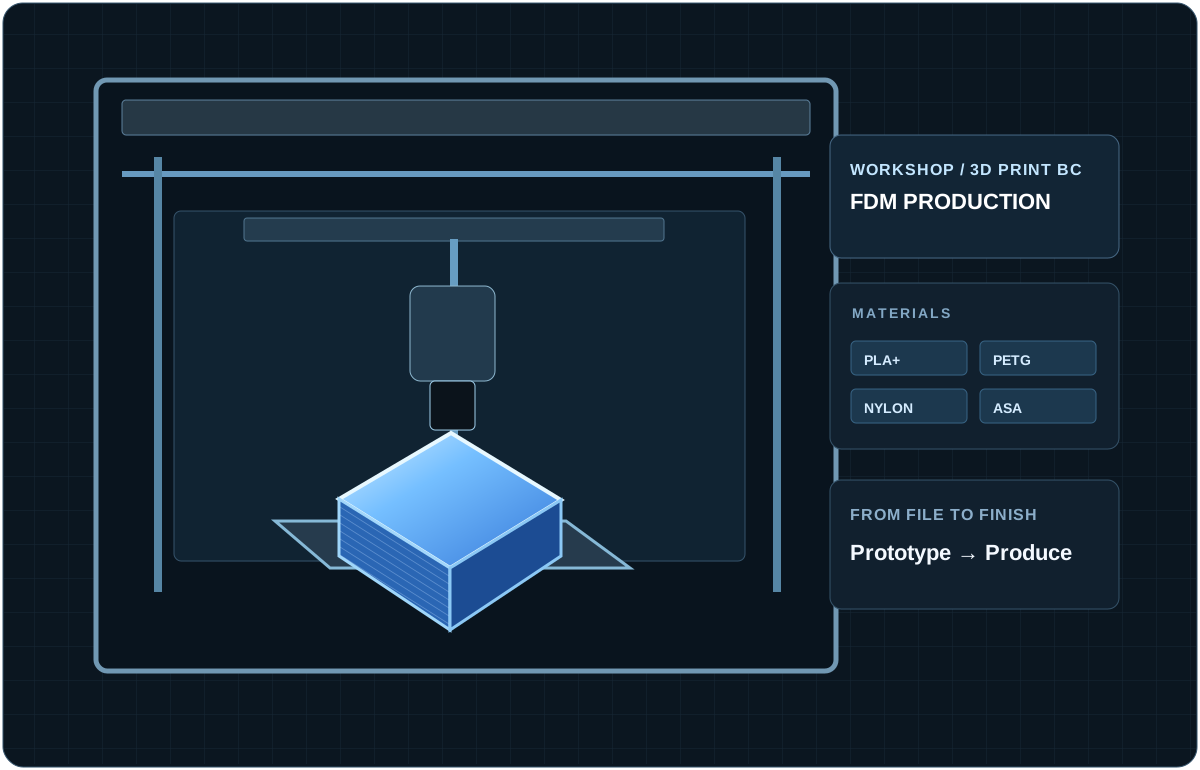
Start with what the part actually needs to do
The first question I ask is not which printer profile is fastest. It is what the part must survive. A decorative object, a light-duty bracket and an outdoor replacement part have very different demands. The expected load, exposure to sun or moisture, flexibility, temperature and dimensional fit should all influence the design.
If a part is going to see repeated force, I also look for sharp corners, thin sections and places where a small crack could grow. It can be quicker to adjust the model than to solve every problem with a slicer setting.
Choose material for the environment
PLA can work beautifully for many indoor jobs, but it is not automatically the right material for heat, weather or impact. PETG is often a useful middle ground when more toughness and moisture resistance are important. ABS, ASA, nylon and other engineering materials can be better suited to particular demands, but bring their own printing and design considerations.
Specifications vary between manufacturers and even between different blends of the same material type. I check the actual filament guidance, printer capabilities and the specific environment before making a recommendation.
Part orientation can matter more than an infill percentage
In filament-based 3D printing, the bonds between layers can behave differently from strength within a layer. That is why a strong print setup still needs the part oriented for its likely loading direction. I look at where bending, twisting and pulling forces will act before choosing an orientation.
Sometimes a different orientation introduces supports or a rougher finish. That trade-off is worth evaluating rather than making every part flat just because it prints easily.
Think about walls, infill and geometry together
Adding more infill is not a universal fix. For many designs, wall count, continuous load paths and local reinforcement make a bigger difference than simply making the inside solid. Fillets can reduce stress concentration and thoughtful rib placement can add stiffness with less material.
The right balance depends on the part. I would rather use an understandable, repeatable process and test it than rely on a single magic setting for everything.
Test fit, then test the real use
A prototype should answer a question. The first print might verify fit, alignment or ease of assembly. A later version can be evaluated for function and life in service. When there is uncertainty, I prefer to identify it clearly instead of overpromising strength.
Printed parts should not be treated as certified replacements for critical structural, medical or life-safety components without appropriate engineering and validation.
Final thought: Every design has trade-offs. The useful part is recognizing them early, testing a workable solution and making the next version better.
These are general maker and software notes based on personal projects, not a guarantee that any particular design will suit a safety-critical application.
← Back to all articles